7 White Annual Flowers That Bloom All Summer Long
If you love a classic garden with timeless white flowers that pop against deep green foliage, then adding white annual flowers to your garden is a must! Whether you’re ready for mass plantings in your garden or to fill your planters or flower beds, these white annuals will give you an abundance of white blooms all season long.
What Are Annuals?
Unlike perennials that return year after year, annuals complete their entire life cycle within a single growing season- from seed to flower to seed. If you’re new to gardening, you might be wondering “why would I plant annual plants if they won’t come back next year?”…
Well, for gardeners hoping for continuous blooms throughout the growing season, annual flowers are an absolute game-changer!
Perennials are truly fantastic in their own right, but annuals give you those showstopper blooms often from early spring, late spring, or early summer through late summer (sometimes longer until first frost!). This short but abundant lifespan encourages them to produce a TON of blooms- and isn’t that what every gardener wants?!
If you’re looking for flowers that deliver a beautiful, season-long show of color, annuals are going to be your go-to choice!
Why Choose White Annual Flowers?

Beyond their classic beauty and charm, white annual flowers offer such versatility in garden design. White flowers add a traditional elegance and timeless sophistication, and can be paired with a wide range of colors like pinks, yellows, purples, or blues (or left simply on their own in a “moon garden”).

Unlike some white perennials, white annual flowers will give you those classic white blooms ALL season long- from spring or early summer and sometimes all the way until that first hard frost. Another plus is that they are low-maintenance and do well in various hardiness zones. For these reasons, white annuals are a popular choice for container gardens.
I love our white peonies, white lilacs and white roses, but they only last a short while, so white annual flowers do a great job in filling in those gaps between perennial bloom times.
Whether you love the structured beauty of a formal garden or the whimsical charm of a cottage garden, white blooms serve as the perfect backdrop- highlighting other colors (such as deep blues or purples, bright pinks, or soft lilacs), or standing beautifully on their own.

Top Picks: Favorite White Annual Flowers That Bloom All Summer
Table of Contents
- Angelonia
- Sweet Alyssum
- Supertunia
- Superbells
- Diamond Frost Euphorbia
- Bacopa
- Verbena
#1 Angelonia (Favorites: Angelface White, Angelface Superwhite, Angelface Cascade Snow)

Angelonia, often called the “summer snapdragon,” boasts the most beautiful tall spikes of pure white blooms that persistently bloom throughout the hottest months. This heat-loving annual thrives under bright sunlight, making it an ideal choice for summer gardens that need continuous bloom while also being low-maintenance.
Its delicate petals and upright form offer an elegant touch to mixed borders, formal gardens, cottage gardens, and container arrangements too! Angelonia has a faint fruity fragrance, and the plant’s sturdy nature also makes it resistant to pests and diseases.
*Note: Angelface Cascade Snow is slightly different, where it grows roughly 14 inches high but spreads about 2.5 feet wide- the absolute PERFECT white annual for summer hanging baskets and planters!
- Sunlight Requirements: Angelonia flourishes in full sun, needing at least six hours daily to reach its maximum bloom potential. So be sure to avoid a shady spot in the garden!
- Watering Needs: While moderately drought-tolerant, Angelonia performs best with regular watering that keeps the soil evenly moist but never waterlogged or soggy.
- Growth Habit: Growing to an average height of 18 to 24 inches (but can also reach the impressive height of up to 30 or 40 inches!), Angelonia develops neat, upright stems with dense clusters of flowers. Angelonia adds vertical interest and texture to planting beds without overwhelming companion plants. As previously mentioned, the Angelface Cascade Snow variety grows wider, making it the perfect choice for a summer container garden or hanging baskets.
- Soil Preferences: Prefers well-draining, slightly acidic to neutral soils that are enriched with organic matter to support sustained growth. Fertilizing monthly can boost flower production.
- Pest & Disease Resistance: Angelonia do not typically attract common garden pests like aphids and spider mites, and is considered to have good disease resistance.
- Pollinator-Friendly: Attracts bees, butterflies and hummingbirds!

Angelonia garden design tips:
- Consider using the taller spikes of white angelonia (summer snapdragon) woven into a cottage-style garden with colorful flowers such as pink English roses and lavender.
- Or, for a more structured, traditional garden, fill a boxwood parterre with those gorgeous angelonia spikes (on my to-do list!).
- Angelonia is a good option for any summer planter arrangement that calls for a “wow factor” or some height.
- White angelonia pairs wonderfully with different shades of color such as blues, dark purples and light purples, and light pinks and bright pinks.
- Use Angelface Cascade Snow Angelonia in a hanging basket on it’s own or in a summer planter as a filler or spiller with flowers of different colors such as Superbells Miss Lilac (a lovely purple shade of the Superbells line of flowers).
*Note: Annual flower combinations for hanging baskets and planters will ensure the bloom combinations last all summer long instead of one color fading in and out with the other!
#2 Sweet Alyssum (Favorites: White Knight, Snow Princess or Easy Breezy)

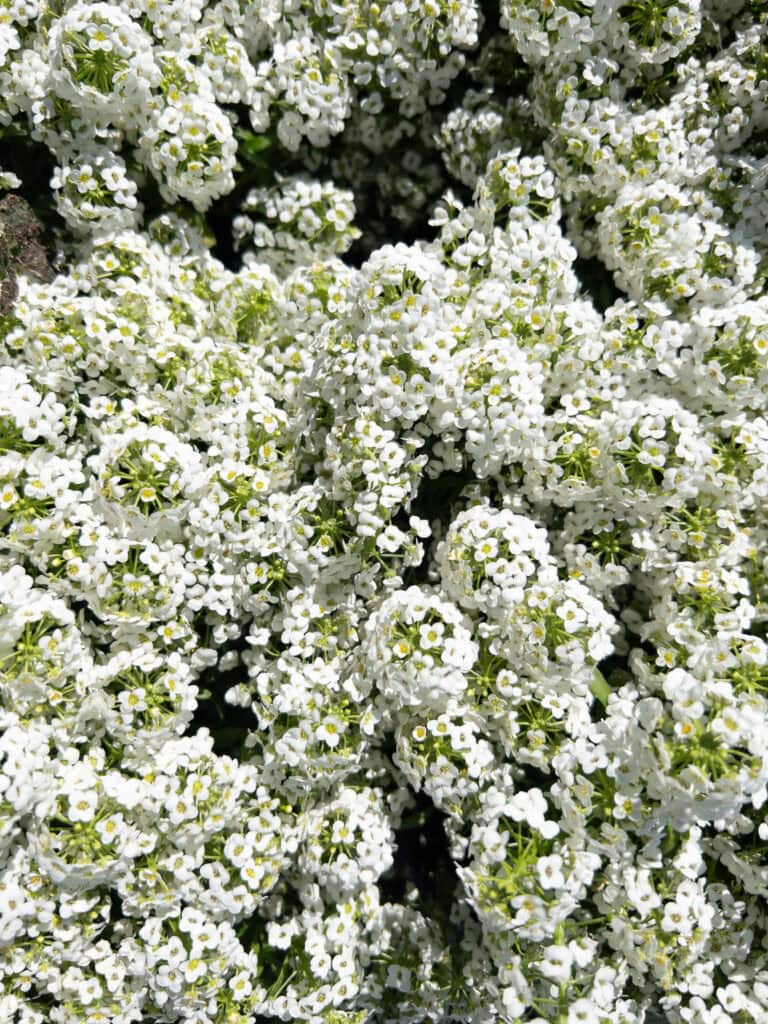
Sweet Alyssum (also referred to as Lobularia) has the most darling small white flowers packed densely in clusters that blanket its low-growing mounds. It’s the perfect choice if you’re looking for a white annual flower that only grows about 6-12 inches tall. Sweet alyssum has the loveliest scent of almond and honey which will attract pollinators like bees and butterflies into your garden throughout the summer months.
This delicate white annual flower is a gardener favorite for its versatility- as it thrives as edging, ground cover, or cascading from large containers. I tend to use this year after year trailing from our raised garden beds, surrounding our vegetable garden. It’s so fun to see the different herbs and vegetables grow being surrounded by the prettiest little blooms of sweet alyssum.

Sweet Alyssum is a popular choice for gardeners and often chosen as one of the best low maintenance, pollinator-friendly vigorous annuals that can withstand the summer heat!
- Fragrant Flowers: These pretty white blooms emit a soft, sweet fragrance of honey and almond, which actually intensifies during warm summer evenings.
- Drought Tolerance: Sweet Alyssum is a tolerant plant that can handle brief dry periods while staying quite resilient under varying summer conditions. However, occasional watering will keep it lush and flowering more intensely. It adapts well to both garden beds and containers exposed to sun. It’s a great option if you live in the deep south, or somewhere with humid summers.
- Growth Pattern: Its low, spreading habit allows it to form a dense carpet of tiny blooms, typically growing 6 to 12 inches in height and spreading outward up to 18 inches. This sprawling growth habit makes it a fantastic choice for softening edges and borders, and filling in gaps between taller plants. It can cover bare soil quickly, reducing weeds (always a win!).
- Ideal Soil: Best suited for well-drained, moderately fertile soils (over fertilizing can actually diminish its scent).
- Uses in Garden Design: Often a favorite border or filler plant, it seamlessly blends with marigolds, petunias, and other summer bloomers. Its trailing growth habit makes it a fantastic choice for window boxes, raised beds and containers or planters where its cascading growth habit can shine!
- Pollinator-Friendly: Attracts bees and butterflies!
Sweet Alyssum garden design tips:
- Consider growing sweet alyssum on the edges of your raised vegetable garden beds to add some pretty flowers (and lovely scent) to highlight the growing herbs and veggies.
- Consider combining white sweet alyssum to trail over the edge of a boxwood planter (you’ll be surprised by how simple, yet timeless this planter arrangement can be!)
- Mix white sweet alyssum with colorful flowers in shades of purple (such as purple angelonia, salvia or supertunias), pink (pink supertunias or ranunculus), or blue (such as blue forget-me-nots or more compact blue hydrangeas) to really make those colors pop in the garden or planter.
- Use sweet alyssum to soften edges, borders and walkways and keep your pathways looking beautiful and smelling sweet!
- Use sweet alyssum in hanging baskets, window boxes, and planters- in places where you can take advantage of its sweet scent.

#3 Supertunia (Favorites: Vista Snowdrift and Mini Vista)

Supertunia is a special petunia hybrid loved by gardeners for its abundant flower production and vigorous growth habit. Its opened, trumpet-shaped white flowers bloom consistently throughout the summer. They tend to not fade under long sun exposure, and they brighten containers or garden beds with their lush consistent blooms. The supertunia’s cascades are ideal for hanging baskets or window boxes. They are also considered “self-cleaning”, meaning they deadhead on their own (less work for gardeners = a win!).
- Bloom Size and Shape: Large, trumpet-shaped flowers measure about two to three inches across and the wide mouth of each bloom serves as a “landing pad” for pollinators such as butterflies and hummingbirds!
- Growth Habit: Supertunia displays a sprawling, trailing form that can extend up to 18-24 inches in length, perfect for cascading down containers or spilling over garden bed edges. This growth habit allows it to soften landscape edges- perfect for garden edges and borders (it’s gorgeous along a garden path).
- Sun Exposure: Thrives in full sun (at least six hours daily), where flower production peaks and colors remain most vibrant (including its crisp shade of white). Although it tolerates partial shade, it may produce fewer blooms.
- Disease Resistance: Supertunias actually have an improved resistance against powdery mildew and petunia-specific viruses. Good airflow and watering further minimize its disease risk.
- Container Suitability: A popular choice for hanging baskets, window boxes, or patio pots, supertunia’s trailing growth habit frames containers beautifully.
- Pollinator-Friendly: Attracts butterflies and hummingbirds!
Supertunia garden design tips:
- Consider using white superunias on their own in a beautiful planter to make both the white flowers and pretty planter pop!
- Use supertunias as the perfect hanging basket or window box arrangement.
- Combine white supertunias with bolder colors like deep purples (purple supertunias, purple angelonia, etc) in planters to really make the other color shine
- Consider using supertunias on the edges and borders in you garden, with taller, upright plants behind it (such as boxwood, purple angelonia, purple salvia, or Russian sage) *Here are some fantastic ideas for purple flowers for your garden!

#4 Superbells (Favorites: White and Double White)

Superbells are compact, neatly branched petunia-like flowers bred to produce swarms of pretty white blooms. Superbells are often the go-to choice for containers- and they typically last through fall. They have a cascading growth habit, are low-maintenance, and attract hummingbirds!
- Flower Characteristics: Each bloom features a distinctive five-pointed star shape with crisp white petals and slightly ruffled edges- they are delicate, charming, and abundant all in one!
- Compact Growth: These petunias typically reach 6 to 12 inches tall with a 12 to 18-inch spread, forming dense, mounded plants. This compact form is ideal for small pots, window boxes, and tight garden spaces.
- Continuous Blooming: Superbells bloom continuously from late spring until frost, requiring minimal deadheading due to their self-cleaning flowers. Superbells are a favorite for gardeners looking for long-lasting blooms without constant upkeep.
- Sunlight Needs: Perform best in full sun, although they can tolerate part sun as well.
- Pollinator-Friendly: Attracts hummingbirds!
Superbells garden design tips:
- Consider filling garden containers with boxwood and white superbells for a classic look (deep rich greens and whites look lovely and timeless together!)
- Mix white superbells with other softer shades of superbells like “superbells yellow chiffon” (soft yellow) or “superbells double twilight” (soft purple), for a beautiful flower combination
- Or pair with other superbells in bolder shades of purple for a classic look that pops (superbells “blue”, “double blue”, or “blue moon punch” are all gorgeous!)


#5 Diamond Frost Euphorbia (Other Favorites: Diamond Snow Euphorbia and Diamond Mountain Euphorbia)

Diamond Frost Euphorbia is a beautiful and unique annual bloom, producing an abundance of tiny, dainty, white starry flowers all summer long. Its fine-textured, lacy foliage offers a “wispiness”, like its blooms, creating a delicate and airy white annual, very different from most denser flowering annuals. The plant’s drought tolerance and pest resistance make it a perfect choice for low-maintenance gardens looking for constant, wispy white blooms (without constant care).
- Foliage Texture: Soft, feathery, and finely divided leaves form a subtle backdrop to its dainty flowers. This airy texture contrasts beautifully with bolder leaf shapes and its pale green foliage fades to a silvery tone under direct sunlight.
- Flower Density: Although each flower is tiny, their sheer number creates a continuous, cloud-like cascade of white throughout the growing season. Diamond Frost Euphorbia produces flowers continuously from spring to frost.
- Watering & Drought Tolerance: Diamond Frost Euphorbia tolerates drought quite well once established, requiring only occasional watering during extended dry spells. Overwatering can actually diminish bloom production. Perfect for a beginner gardener or one that prefers low-maintenance!
- Pest & Disease Resistance: Shows good resistance to common garden pests and diseases.
- Design Flexibility: Perfect as a filler plant in containers, mixed beds, or as a soft edging, its wispy form complements different garden styles. It mixes well with bold flowers such as salvias or petunias and stands out dramatically against dark foliage backgrounds like a boxwood hedge. Many gardeners and landscape designers love Diamond Frost Euphorbia for its light texture, delicate wispiness and versatility.
- Pollinator-Friendly: Attracts bees

Diamond Frost Euphorbia garden design tips:
- Consider planting diamond frost euphorbia in a planter with a small ornamental tree such as a limelight hydrangea tree or even a boxwood topiary.
- Diamond Frost Euphorbia is so delicate and versatile, that you can truly it mix with a wide array of flower colors- bolder blooms like purple superbells, salvia, or summer snapdragons, or softer blooms like light pink English roses (such as Earth Angel rose).


#6 Bacopa (Favorites: Snowstorm and Giant Snowflake)

Bacopa is a petite, trailing annual known for its continuous bloom of small, white, five-petaled flowers that gracefully spill over containers all summer long. This charming plant flourishes under sunny to partially shaded conditions, adapting to a variety of growing situations. Bacopa’s neat, glossy green foliage contrasts beautifully with its delicate white blossoms. Its easy care, combined with steady flower production, makes it a popular choice for gardeners who want garden charm without much effort.
- Trailing Habit: Bacopa’s compact stems trail gracefully over edges, cascading from hanging baskets or container rims in a soft flow of blooms.
- Flower Longevity: The white flowers are long-lasting, often remaining open on the plant for days, and new blooms continuously appear throughout the season. This results in an abundant floral display without significant gaps. Deadheading is minimal due to the plant’s self-cleaning flower habit, perfect for a beginner gardener!
- Light Requirements: Performs well in both sun and partial shade- perfect for decks, porches, or lightly shaded garden beds. Too much intense afternoon sun in very hot climates can cause slight leaf scorch, but overall Bacopa tolerates diverse light environments well.
- Watering Needs: Requires consistently moist soil to sustain bloom production. However, overwatering should be avoided to prevent root diseases.
- Pollinator-Friendly: Attracts bees
Bacopa garden design tips:
- Take advantage of bacopa’s trailing habit and plant as a filler or spiller in containers mixed with other steady-blooming annuals such as supertunias or superbells
- White flowers pair beautifully with varying shades of purple, so consider mixing with purple angelonia, supertunias, or salvia

#7 Verbena (Favorites: Cadet Upright, Lanai White, Scentsation White, and Superbena Whiteout)

White Verbena flowers, with their delicate blooms and airy appearance, offer such a charming addition to any garden. These versatile flowers are not only adorable but also highly beneficial to the garden, attracting a wide array of pollinators. Their extended blooming period ensures a continuous display of crisp white, making them a favorite white annual flower amongst gardeners.
- Sunlight Preferences: White verbena thrives in full sun, requiring at least 6-8 hours of direct sunlight per day to produce abundant blooms. While it can tolerate some partial shade, flowering may be reduced.
- Maintenance: Generally low-maintenance, white verbena prefers well-draining soil and moderate watering. Once established, it is relatively drought-tolerant. Deadheading spent blooms can encourage more flowering, though some varieties are self-cleaning (like Superbena Whiteout by Proven Winners).
- Flower Structure: Verbena produce the most darling, small, five-petaled flowers clustered together in flattened or rounded heads.
- Attracts Pollinators: These flowers are excellent for attracting a variety of pollinators, including bees (such as honeybees and bumblebees), butterflies (such as monarch, swallowtail, and painted lady butterflies), and even hummingbirds due to their nectar-rich blooms.
- Container Suitability: Many varieties of verbena, especially the more compact or trailing types, are well-suited for containers, hanging baskets, and window boxes.
- Compatible Flowers: Verbena pairs well with a wide range of plants that share similar sunlight and water requirements. Good companions include:
- Supertunias
- Superbells
- Salvia
- Coneflower
- Geraniums
- Dianthus
- Catmint
White Verbena Design Tips
- Create a moon garden: White Verbena is perfect for a moon garden, where its white flowers will “glow” under moonlight. Pair it with:
- White supertunias
- White garden roses
- Lamb’s Ear for silvery foliage
- Soften edges and borders: Use white verbena to create a soft, romantic feel in garden borders. Its delicate blooms are so darling- I promise it will make you smile as you walk by and see those pretty little flowers! Pair it with:
- Pink Roses
- Hydrangeas (Pink or blue hydrangeas would create a fabulous contrast)
- Russian Sage or purple salvia varieties (to create a beautiful pop of color, while also creating an ultra pollinator-friendly garden!)
- Consider white verbena for your summer planters: Verbena’s trailing or mounding habit makes it an excellent “spiller” or “filler” in mixed container arrangements! Pair it with:
- Purple Superbells and Supertunias
- Blue Lobelia
- Purple Angelonia
- Consider using white verbena in your cottage garden to add charm: Its natural, delicate, and somewhat whimsical appearance fits perfectly into coastal or cottage garden styles- it’s simply lovely! Pair it with:
- Salvia
- Russian Sage
- Garden Roses

Care Guide: How To Keep White Annual Flowers Blooming All Season (And Thriving)

While all flowers have their own unique care needs, these white flowers listed fall into the “easy-care annual” category. These are all great plants for the beginner gardener, too! You could honestly set-it-and-forget-it, plant once, water, make sure to water if there is a bit of a drought, leave them be, and they very well just might thrive all summer.
However, if you want to ensure your blooms thrive, be sure to research the specific annual you chose for your exact climate and hardiness zone. Cold climates and warm climates have different needs- as a sunny location in cool weather may need less water than a full sun location (or even part sun location) in a hotter climate.
As a general rule of thumb, keep flowers well watered, but don’t leave the water soggy.
With a bit of care, you’ll be enjoying these gorgeous white annual flowers all summer long!
Favorite Gardening Tools and Finds