Beautiful Stone Paver Driveway Ideas (And Favorite Stone Pavers)
Adding a stone paver driveway to your outdoor space will instantly elevate your home’s curb appeal and give a classic charm to your property! Adding natural stone pavers is an excellent choice if you do not care for standard asphalt driveways or the look of a giant concrete slab. Traditional pavers offer character that is unmatched, and have a truly timeless appeal.
However, there are many things to consider before choosing the right paving stone for your driveway. So let’s take a look at some pros and cons of using natural paving stones, as well as some beautiful stone paver driveway design ideas!
Why You’ll Love A Stone Paver Driveway
While asphalt and concrete driveways can look nice with the right landscape design, stone paver driveways offer a unique look with their natural beauty and charm. If you’ve ever been to Europe, or at least have seen pictures, authentic cobblestones line streets, paths and driveways everywhere you turn. Their character has stood the test of time and offers a nostalgia that is quite frankly missing from today’s modern streets and driveways.

This isn’t to say that an asphalt or concrete driveway can’t have charm- in fact, I’ll show you a few examples below where pavers simply line an asphalt driveway and it looks beautiful! If your personal style is more drawn to the look of old-world European pavers, they might just be the perfect first choice for a driveway.
From basketweave to herringbone, there are numerous paver design layouts possible when designing your driveway. And from browns to grays, you’ll love the variety of colors available for a stone paver driveway!

Not only do stone paver driveways look beautiful and timeless, they are very durable and can withstand heavy vehicle weight. Permeable pavers offer improved drainage from heavy rainfall making them a popular choice for their eco-friendly benefits. Plus, they can withstand temperature changes and they do not require heavy regular maintenance!
Pros And Cons Of Stone Paver Driveways
Pros:
- Best option for timeless appeal
- Many different colors available (from rich colors and earthy tones of browns, to cooler gray tones, to vibrant colors)
- Different paver materials / different types of stone
- Top choice for adding character to your home’s exterior space
- Unique design options with different patterns (basket weave, etc)
- Adds visual appeal vs. the simplicity of asphalt/concrete
- Typically low maintenance
- Can withstand heavy loads of weight (*remember, Europe’s streets are lined with stone pavers that can withstand heavy vehicular traffic!)
- Available as permeable pavers
- More eco-friendly and has better drainage than a concrete, asphalt or brick paver driveway
- Made of durable materials
- More durable than an asphalt or brick driveway
- Low water absorption rate
- A permeable paver driveway allows water to flow between the gaps of the pavers vs puddling
- Can handle freeze-thaw cycles
- A heating system can be installed beneath pavers to keep snow from accumulating
- Some states even offer tax incentives for installing permeable driveway pavers because the paver system reduces the stresses on stormwater collection and it also helps remove pollutants, improving water quality.
- The look and texture of natural stone can’t be beat!
Cons:
- For a new paver driveway, it is typically the most expensive option when compared to driveways made from poured concrete, asphalt, or even brick pavers
- Labor costs are higher than poured asphalt or concrete due to the nature of the installation process of hand-laying pavers
- Weed growth between pavers is possible (although it can be prevented with polymeric sand or natural remedies)
- Typically higher total cost: Initial investment with larger upfront costs (price per square foot varies)
- Cost of stone permeable driveway pavers per square feet is higher than asphalt or concrete driveway costs overall
Popular Types Of Natural Stone Pavers

There are various materials available for driveway pavers, but these natural stone pavers tend to be the most popular choices:
- Cobblestone Pavers (** see note below!)
- Granite Pavers
- Travertine Pavers
- Limestone Pavers
- Sandstone Pavers
- Basalt Pavers
Cobblestone Pavers
If you’re new to the world of pavers, you might not even be aware that there are actually various materials that create “driveway pavers”. If you’re looking for that old world charm, you might immediately jump to the term “cobblestone pavers”. But cobblestone pavers are actually made from different types of natural stone such as granite, limestone, sandstone, or even basalt. The term cobblestone pavers actually refers to small blocks of rounded stones- paving materials made from natural stone- so it actually has more to do with the look and the shape. This is not a modern look with sharp clean lines, but rather, that old world European-inspired paver look that is simply timeless and so lovely!
Granite Pavers
Granite pavers are extremely durable, water-resistant (also often used as pavers for pool decks), and ideal for heavy traffic. Granite sett driveways are not only equipped to handle the intense weight, but they also tend to hide stains due to their shades of gray. Granite pavers are also beautiful, which is why they tend to be a very popular choice as pavers for pool areas or a favorite outdoor living space.
Travertine Pavers
Travertine pavers for a driveway are a good idea if you’re looking for something that provides plenty of traction for tires, is typically easy to replace, is mostly stain resistant (when properly sealed), and have insulation properties deflecting heat from the hot sun (if you’ve ever been on a hot asphalt driveway or parking lot- you know then that this is a big pro for natural stone!). Travertine also comes in various sizes.
Limestone Pavers
Natural limestone pavers are another option for the driveway as they are strong, weather-resistant, and can withstand heavy vehicle weight. As a natural stone, they are also eco-friendly! Limestone pavers are available in beautiful light colors that might be tempting to use, but it is typically discouraged as they are more likely to show dirt and stains more easily than darker limestone pavers, which means they need regular cleaning much more frequently (and who has time to devote to constant cleaning of the driveway?!)
Sandstone Pavers
Sandstone pavers are a smart choice if you’re looking for a natural stone that is highly durable, provides good traction, and can withstand harsh weather conditions. Sandstone pavers have a natural beauty with beautiful texture, veining, and color- from warm brown hues to striking black.
Basalt Pavers
Basalt pavers are a good option for a stone paver driveway because not only are they very durable, the paving setts dark steel gray color (that looks black when wet) hides all dirt and stains that are bound to happen with heavy car traffic. It’s an easy-to-clean, waterproof volcanic natural stone that is extremely long-lasting. While the average cost of basalt pavers can fluctuate, it tends to be a less expensive material than some high-end natural stones such as granite.
Maintenance Tips For A Stone Paver Driveway
- Sweep and rinse with a hose regularly
- Address car oil stains quickly
- Seal every 2-4 years
- Avoid de-icing salt (some opt for a chloride-based product that is less likely to corrode the sealant or stone)
- Remove weeds if they grow between joints
- Inspect joint sand to make sure it is in prime condition and to prevent weeds
- Avoid metal blades that may chip the stone during snow removal (use shovels with a plastic blade, or a snow blower with a rubber edge)
Beautiful Stone Paver Driveway Designs

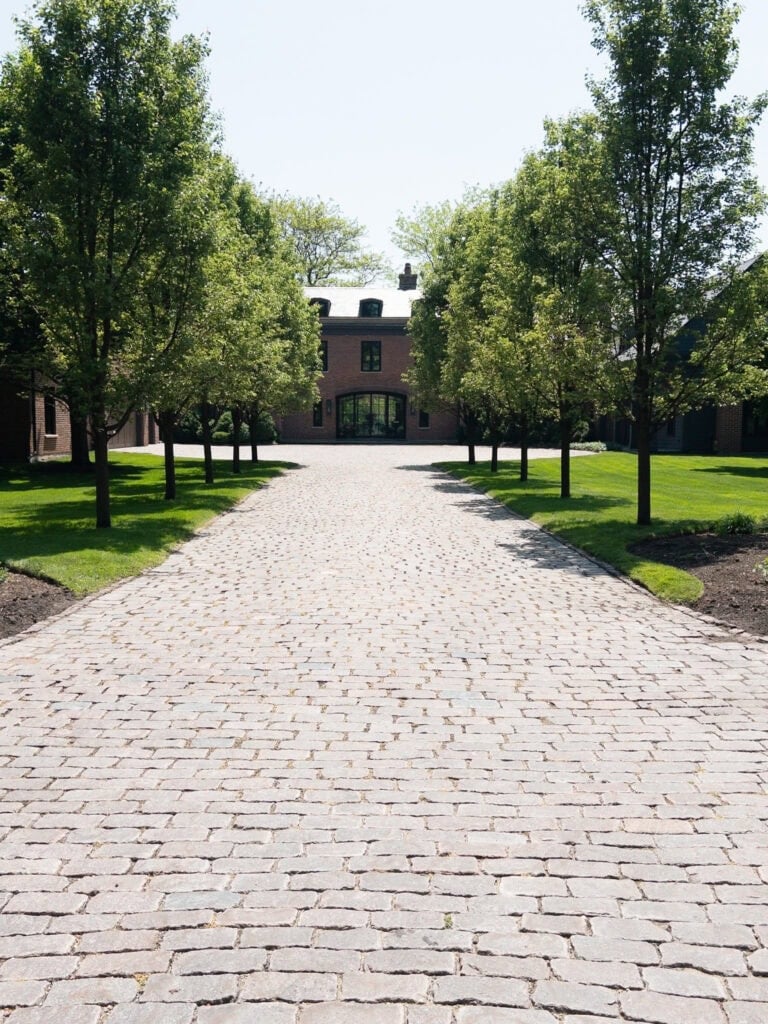
Above, this is a beautiful classic running bond pattern of stone pavers, where the pavers run in a linear side-by-side pattern, while staggered every other row. This conveys the classic subway tile look you’ll see in bathrooms and kitchens. Stone pavers line the edges of the long paver driveway to “close in” the pavers. This is a stunning option for a long driveway!

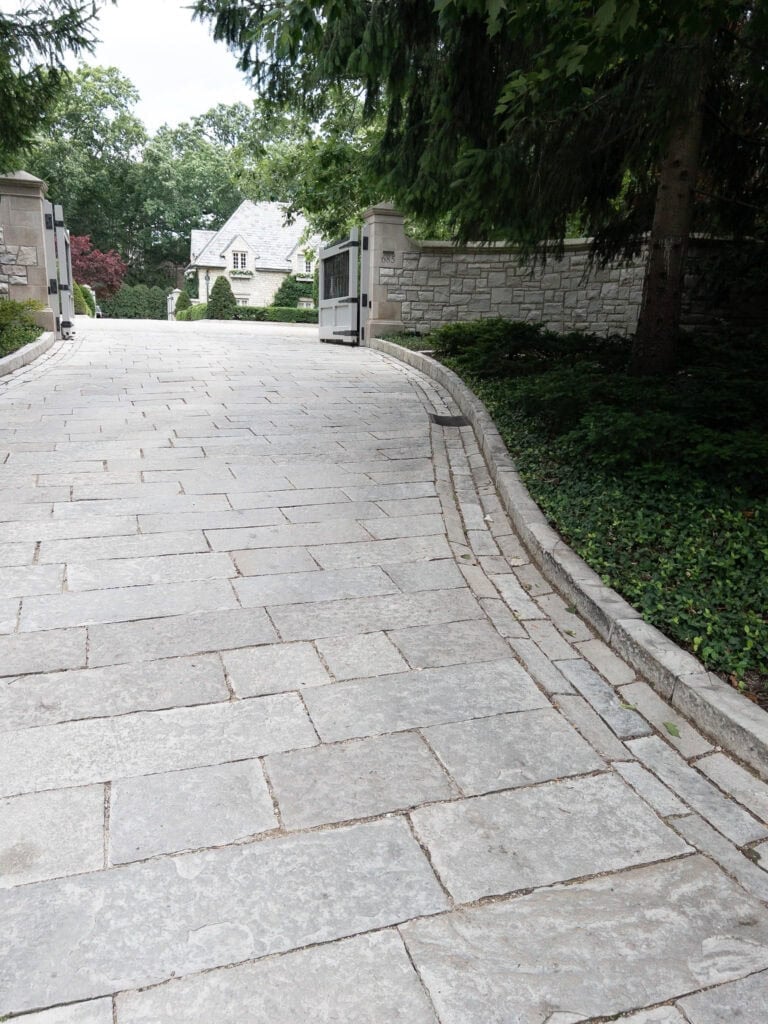
Above, the lighter stone pavers complement the lighter stone exterior of this gorgeous French inspired home. Here, larger stone pavers are used in various sizes (smaller, medium-length, and longer pavers), solely in the entry of the driveway, leading to a pea gravel driveway (which is more cost-effective).

Since pea gravel is a cost-effective option, using stone pavers in the entry of the driveway only is a great way to offset the higher cost of stone pavers. The lighter stone pavers and light pea gravel work beautifully together.

Adding some change in pattern toward the edges of the driveway brings character and visual interest. While larger pavers are used for the main part of the driveway here, smaller pavers are used in 3 rows in a curved design flush against raised pavers to outline the lush green ground cover. When possible, adding raised pavers is a beautiful way to showcase your garden edging, while keeping the base of the driveway free from plant overgrowth or loose mulch.


While this stone paver driveway above is equally as stunning, since there are no raised pavers, it may require a bit more maintenance when mowing the lawn, or keeping the soil / mulch contained in the adjacent garden bed. A simple single line of small square stone pavers works wonderfully to outline the larger driveway filled with rectangular stone pavers.

This driveway offers a stacked square paver layout, while offering an imperfect charm. Also used as the entryway to a pea gravel driveway, this is a fabulous way to cut down costs of a full stone paver driveway.

The imperfectly stacked square pavers offer such a lovely charm, with moss growing between the pavers, and gorgeous Annabelle hydrangeas draping over.

These stone pavers actually continue around the pea gravel driveway and up to the front entry- what a lovely paver layout!

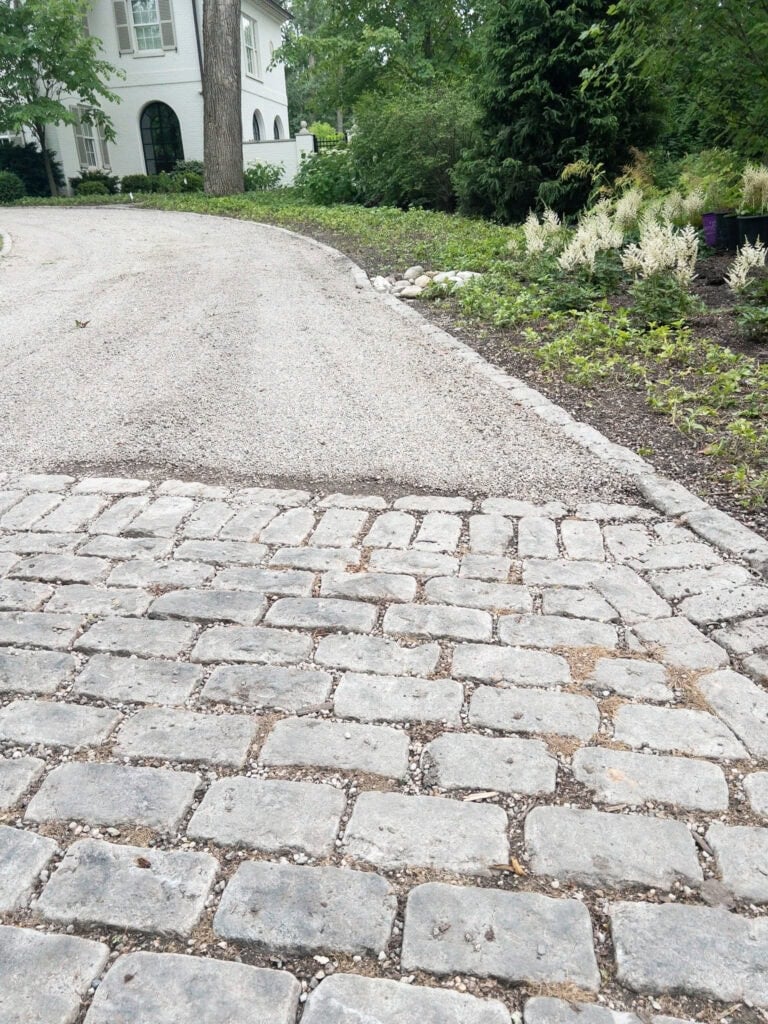
While this cobblestone driveway leads to a larger asphalt driveway, there is so much charm and visual interest leading up to the asphalt platform. From the imperfectly spaced pavers of various small cobblestone sizes, to the changes in direction of the pavers- it’s beautiful. Consider this pattern for your driveway- raised pavers near the garden border, 2 rows of stacked cobblestone pavers that enclose 3 rows of side by side pavers that round the curve, meeting the main paver driveway layout.

The above pavers have a classic-meets-modern look. The actual pavers look a bit more traditional, whereas the sharp edges of the raised pavers and the garden bed feel a bit more modern.

Another example of how small stone pavers really elevate your driveway, even if it leads to an asphalt driveway. The darker color gray stone pavers complement the gray asphalt, and will also hide stains from car traffic.

Raised stone pavers are a seamless way to connect the stone paver driveway and a beautiful landscaping like this corner of hydrangeas and boxwood.

Consider this pattern when having a stone paver entry meet an asphalt driveway: various sized cobblestones, with raised pavers that encompass the entire driveway, and square pavers that create the border between the paver and asphalt driveway.

This driveway calls for a basketball court, so it has the perfect mix of asphalt and stone pavers for being both kid-friendly and adding character to the exterior property.

Another beautiful example of how the change in direction of the pavers along the edges creates such a beautiful visual interest.
While an asphalt driveway will need resealing every 3-5 years, and can fade in color, the initial upfront costs may be worth it to have a stone paver driveway whose aged appearance gives a classic charm vs a wear-and-tear look.
Stone paver driveways truly offer so much beauty, charm, and eco-friendly benefits that are unmatched, and they are a fantastic way to boost the curb appeal of your home!
You’ll Also Love:
8 Summer Planter Ideas That Are Simply Stunning
Timeless Tile On A Budget: Floor And Decor Tile