
Porcelain Tile Vs Marble: Pros, Cons, and Design Ideas
Porcelain tile vs marble: Which is the better choice for your next tile project? Well the answer is just as you might’ve suspected: it depends! There are so many factors to consider: Are the tiles for high-traffic areas? Are the tiles for the walls or the floor? Do you LOVE the natural beauty of real marble tiles? Are you okay with a bit more maintenance?
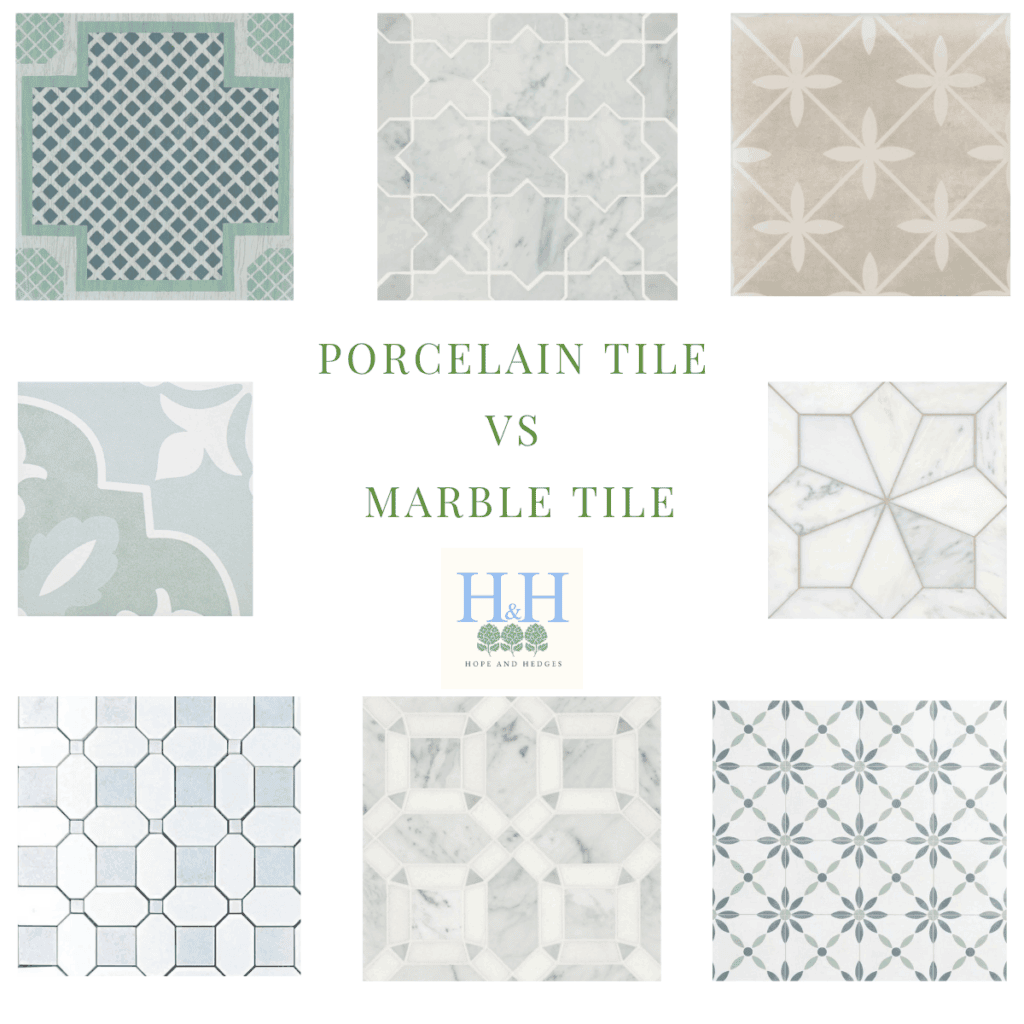
If you’re on the fence between porcelain tile or marble tile, let’s take a closer look at the pros and cons of each, and explore some design tips and inspiration from interior designers so you can make an informed decision on the best choice of tile for your specific project!
Porcelain Tile Vs Marble Tile: Questions To Consider
Before jumping in to all the pros and cons of marble tile vs porcelain tile, these are some questions you might want to consider when debating between marble tile vs porcelain:
- What is your budget for materials and installation? Is a lower cost important to you? Marble is typically more expensive for the material itself, and installation can also be higher due to its delicacy and specialized cutting, although installation costs truly varies for both.
- How much ongoing regular maintenance are you willing to do? Marble is porous and requires regular sealing and cleaning with pH-neutral products to prevent staining and etching, while porcelain is low-maintenance, waterproof, and doesn’t need sealing.
- If using as floor tiles, will there be heavy foot traffic? Will kids be using this space? Porcelain is denser, harder, and generally way more resistant to scratches, wear, and staining, making it better for heavy-traffic areas and being the kid-friendly tile choice favorite! Whereas marble is softer and more prone to scratching, chipping, and etching.
- Is the tile for a wet area like a bathroom, shower, or kitchen? Porcelain’s non-porous material makes it the better option for water resistance. While marble can be used, its porosity means it is more susceptible to water damage, staining from toiletries/foods, (and let’s be honest, boys that might miss the toilet!), and requires sealing for protection.
- Do you prefer a truly natural look or a consistent, versatile design? Marble offers an authentic, one-of-a-kind look with natural veining and color variation. Porcelain offers more design versatility in terms of color and pattern (including marble-look patterns)
- Are you planning to install the tile outdoors or in an area with temperature extremes? Porcelain is frost-resistant and better suited for outdoor spaces and climates with freeze-thaw cycles, whereas marble is generally not recommended for exterior use.
- How concerned are you about your home’s resale value? Genuine marble is often perceived as a luxury material that can significantly increase a home’s high-end appeal and resale value, while porcelain generally has less impact on value. (Although I would not let this deter you! Porcelain can be more appealing to new home buyers, especially if they have young kids.)
- Do you need a slip-resistant surface? It’s important to consider the finish for both types of tile. Honed or textured finishes on either material are safer and less slippery than highly polished surfaces, especially in wet areas. Polished marble can be very slippery underfoot! High quality porcelain often has good slip-resistance, and more so than marble overall.
- Are there concerns about acidic spills (like lemon juice, vinegar, or nail polish remover)? Marble, being a natural stone, is highly susceptible to etching and permanent staining from acidic substances. (This is typically more of a concern for marble counter tops, but maybe you don’t want to risk a bathroom or kitchen backsplash getting damaged from acidic spills and splashes.) Porcelain, on the other hand, is highly resistant to these spills.


Pros Of Using Porcelain Tile
- Durability and Hardness: Porcelain tile is extremely hard, dense, and resistant to scratching, chipping, and wear, making it excellent for high-traffic areas (especially if you have kids and pets!).
- Low Maintenance: It does not require sealing and is easy to clean with standard cleaning products (unlike natural stone).
- Water and Stain Resistance: Due to being non-porous (having a very low water absorption rate), it is highly resistant to moisture, humidity, and stains, making it ideal for bathrooms, kitchens, mudrooms, and laundry rooms.
- Design Versatility: It can be manufactured to mimic the look of natural materials like marble, wood, or stone, offering a vast range of colors, patterns, and finishes.
- Cost-Effectiveness: It is generally more affordable than natural marble for both material and long-term maintenance.
- Outdoor Suitability: High-quality porcelain is frost-resistant and fade-resistant, making it a durable option for outdoor use.
- Fire Resistance: It is non-flammable and heat-resistant due to its manufacturing process.
- Consistency: Unlike natural stone, porcelain tiles have a uniform size, color, and thickness, which can simplify the installation process.
- Beautiful Options: Porcelain tile has truly come a long way in the last few years especially! You can find porcelain tile that looks like marble or limestone without the maintenance or cost. And tile companies are now partnering with interior designers and artists to create beautiful porcelain tile designs!

Cons of Using Porcelain Tile
- Difficult and Costly Installation: Porcelain’s extreme hardness and density make it difficult to cut accurately, requiring specialized tools (like a wet saw with a diamond blade) and professional expertise, which increases labor costs. For example, if you found a beautiful 12×24 inch tile that you wanted to turn into a checkerboard pattern tile floor, it is much more difficult to cut them into 12×12 pieces.
- Heavy Weight: The dense nature of the tile makes it heavier than ceramic or other flooring types, which can be a concern for installation on upper floors and may require subfloor reinforcement.
- Hardness Underfoot: While durable, the rigid surface offers no cushion, which can be uncomfortable to stand on for long periods and means dropped items (dishes, glass) are more likely to break.
- Can Be Cold Underfoot: Porcelain pulls heat away from your feet, making it feel cold, especially in cooler climates. (However, some porcelain tile can actually feel warmer than marble tile underfoot!)
- Can be Slippery When Wet (Polished Finishes): Highly polished or glazed porcelain can be very slippery when wet, creating a safety risk. (Porcelain tile with a matte surface or textured finishes however, have a high slip resistance!)
- Grout Maintenance: Although the tile itself is low-maintenance, the grout lines are porous and vulnerable to staining, discoloration, and mold/mildew, requiring regular cleaning and sealing.
- Difficult to Repair/Replace: Due to its hardness, removing a damaged porcelain tile to replace it can be a challenging and time-consuming process.’
- Concerns of “Marble Look Porcelain”: some main concerns are that it may “look fake” once installed (however, some look better than others!)
Pros of Using Marble Tile
- Timeless and Luxurious: Marble is a natural stone prized for its high-end luxury, elegance, and sophistication that has been used in design and architecture for centuries.
- Unique, Natural Appearance: Since it is a natural product, every piece features unique veining, color variation, and pattern, ensuring that no two tile pieces are exactly alike.
- Increases Home Value: The use of genuine natural marble is a high-end finish that is often recognized by appraisers and sought-after by prospective buyers, potentially increasing the resale value of the home.
- Light Reflection (Especially Polished): Polished marble has a slightly translucent quality that allows it to reflect light, making rooms appear brighter, larger, and more open.
- Excellent for Underfloor Heating: Marble is a great thermal conductor, which means it heats up quickly and distributes warmth effectively when paired with a floor heating system.
- Customization and Versatility: It can be cut into complex patterns (like mosaics or medallions) and its edges can be easily shaped- perfect for creating custom designs that elevate a space.
- Looks Gorgeous: Marble tile is a beautiful tile that is often used throughout kitchens, bathroom floors / walls, shower niches, throughout mudrooms, laundry rooms, and even entryways.

Cons of Using Marble Tile
- High Cost: Marble is one of the more expensive flooring materials to purchase, and installation costs are also high due to the specialized labor required.
- Porous and Prone to Staining: Marble is a naturally porous stone that can easily absorb liquids. Spills like wine, coffee, or oil can lead to permanent stains if not wiped up immediately. Since it is so porous (and slippery), it’s not reommended for outdoor settings.
- Etching Susceptibility: Because marble is composed of calcium carbonate, it reacts instantly to acidic substances (like lemon juice, vinegar, nail polish remover, or harsh cleaners). This reaction “etches” the surface, leaving behind permanent surface marks.
- Requires High Maintenance: Marble must be professionally sealed immediately after installation and then re-sealed regularly (typically every 6–12 months or annually) to maintain its resistance to stains and moisture. (MUCH more maintenance and proper care required than compared to low-maintenance porcelain tile)
- Scratching and Chipping: Although durable, marble is a softer stone that can be scratched by dragged furniture or a small stone trapped to the bottom of your shoe, or chipped/cracked if a heavy object is dropped on it.
- Slippery When Polished: Highly polished marble can be a significant safety hazard, especially in wet areas like the bathroom floor, as it provides very little traction.
- Cold Underfoot: Like other natural stones, marble tile feels cold to the touch, which can be a drawback in colder climates unless underfloor heating is installed (which is another added expense).
Porcelain Tile Vs. Marble Tile
Marble vs porcelain tile: what’s the main difference? The core difference lies within their raw materials: marble stone is a unique natural stone product, a type of metamorphic rock, whereas porcelain is a highly engineered type of ceramic tile, making it a man-made material that’s been fired at high temperatures. This process results in the solid durability of porcelain tiles. Their non-porous material makes them a fabulous choice for busy, wet areas both inside and outside of the home.
(Are porcelain tiles the same as ceramic tiles? The short answer is: No, porcelain tiles are not exactly the same as ceramic tiles, but porcelain tile is a type of ceramic tile. The key differences come down to their composition and manufacturing process, which affects their density and water absorption rate.)
Marble stone is the real thing, offering a high-end, classic look (don’t we all just love marble?!). Marble has a stunning smooth surface and timeless elegance that’s top of the line. Marble tiles are commonly used as bathroom tiles (both floor tiles and wall tiles), in kitchens, mudrooms, and even laundry rooms or sun rooms. However, it comes with maintenance requirements: being a relatively soft and porous material (rating lower on the Mohs hardness scale), marble flooring and wall tiles are prone to staining and etching from acidic substances, requiring annual sealing and pH-neutral cleaning solutions on a regular basis to keep it in good condition.


While every piece of marble has a classic visual appeal with unique texture in their veining, each porcelain tile can look the same for a uniform look (if that’s what you prefer!). Although, if you like the look of marble but still prefer the durability of porcelain, nowadays there are some great marble-look porcelain tiles available!
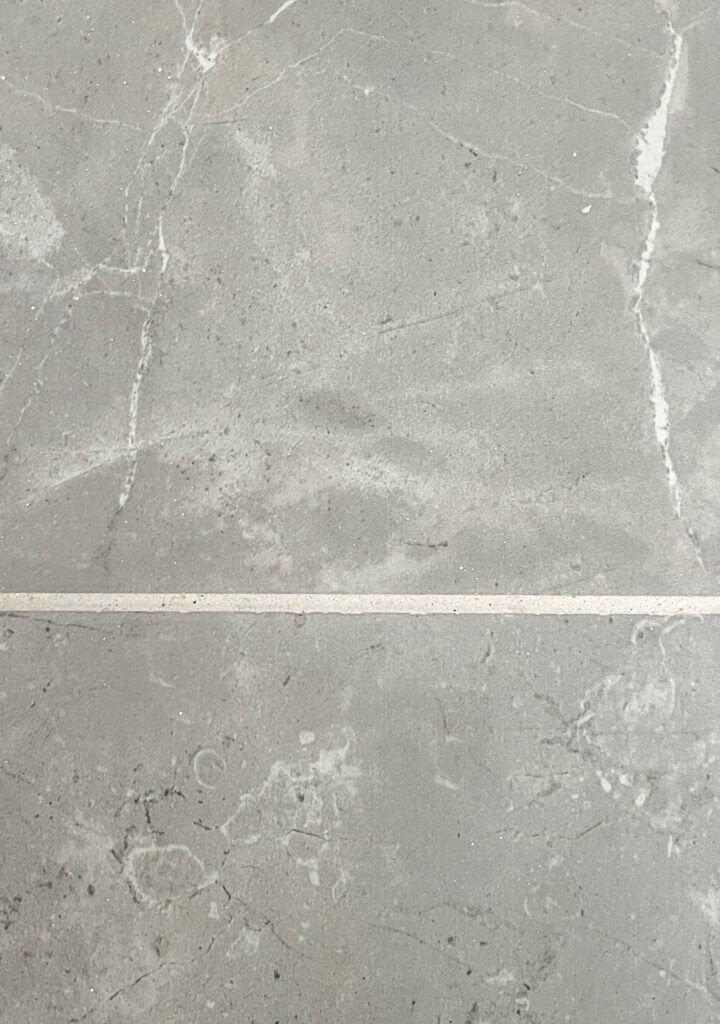
Marble look porcelain tile uses advanced technology to create realistic-looking designs that look like marble but are, in fact, porcelain!

Porcelain marble look tiles have become a highly popular choice and an excellent choice if you really want the look of marble without the upkeep. These types of tiles are manufactured for exceptional durability and are non-porous, making them a better option when it comes down to maintenance and resistance to moisture (which is why they are popular in high-traffic areas like a mudroom or bathroom, or even outdoor areas prone to harsher weather conditions). While some people may judge the look as “fake marble,” the quality of these marble lookalikes is really looking better and better each year!

Some people ultimately choose porcelain because of it’s typical lower cost per square foot, the fact that it requires less maintenance than marble, and because it’s such a durable manufactured material perfect for wet areas or kid spaces (its that just right material for kids bathroom floors where a non-porous flooring option is a very smart idea!)

Although it’s easy to overcomplicate all the nitty gritty details of the porcelain vs marble tile debate, the right choice for you essentially comes down to a decision between the timeless beauty of natural stone and a more practical choice of durable materials.
Both are very good tile choices and popular options, but deciding between genuine marble stone tiles and porcelain tiles (or porcelain marble look tiles) depends entirely on your specific needs, budget, and willingness to commit to the higher maintenance requirements for that classic beauty of marble.
While marble and porcelain are both super popular materials for tile, the decision ultimately comes down to which is the right option for YOU and your specific space. And if you are someone who loves, loves, loves marble, then chances are you’ll throw all concerns out the window and stick to that timeless marble tile 🙂
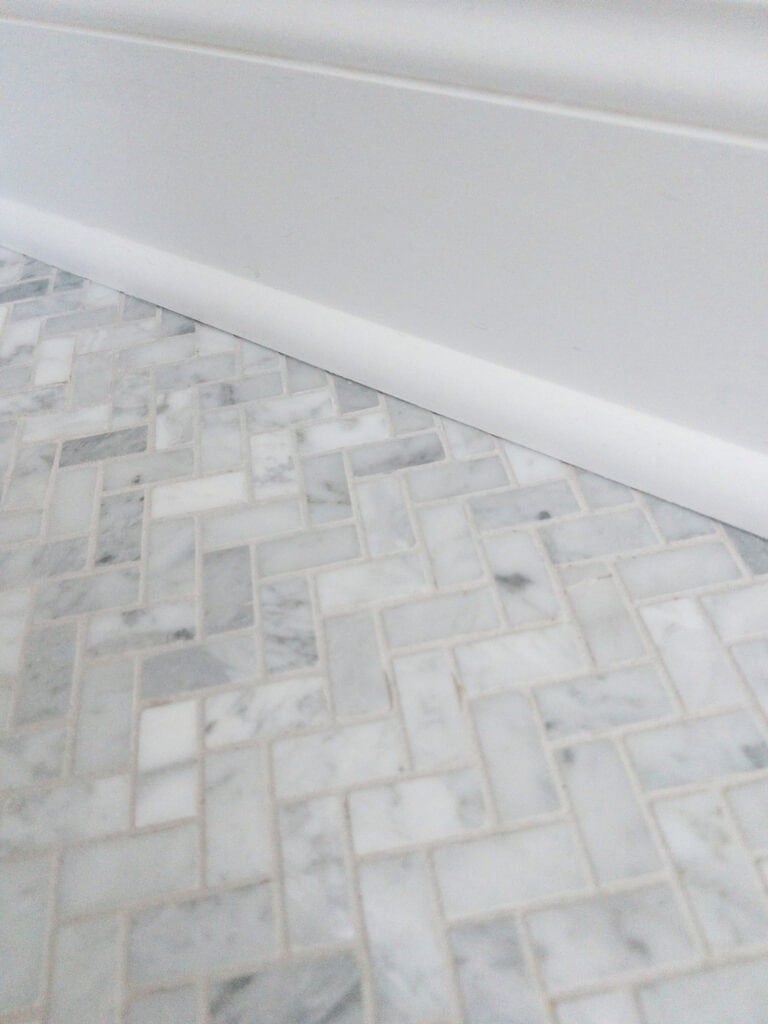

Marble, Porcelain, and Marble-Look Porcelain Tile Ideas
If you’re not ready to commit, you can order a bunch of samples of both porcelain and marble tiles to be sent to your home overnight via DesignShop!
These are a few favorite porcelain tiles, marble-look porcelain tiles, and marble tiles that would look fabulous for your next tile project!

Here are some beautiful porcelain tile ideas:


Links: Tile One, Tile Two, Tile Three


Links: Tile Four, Tile Five, Tile Six
Here are a few marble-look porcelain tile ideas:


Links: Tile One, Tile Two, Tile Three
And here are a few favorite marble tile ideas:


Links: Tile One (sample HERE), Tile Two (sample HERE), Tile Three (sample HERE)

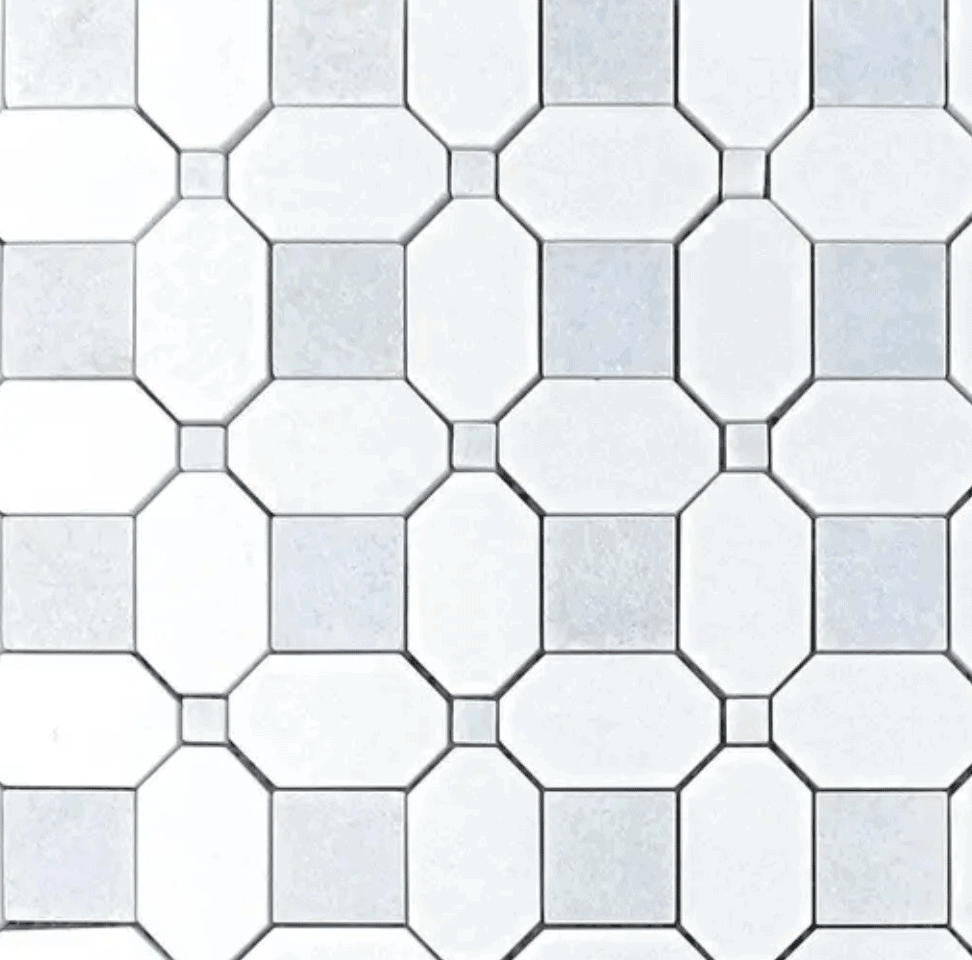

Links: Tile Four, Tile Five, Tile Six
Other Posts You’ll Love:
Classic Quatrefoil Tile Design Ideas (Clover Tile)
Timeless Tile On A Budget: Floor And Decor Tile
Mapei Warm Gray Grout: A Favorite Grout For Marble Tile
Mapei Avalanche Grout: A Favorite Grout Color For White Tile


